
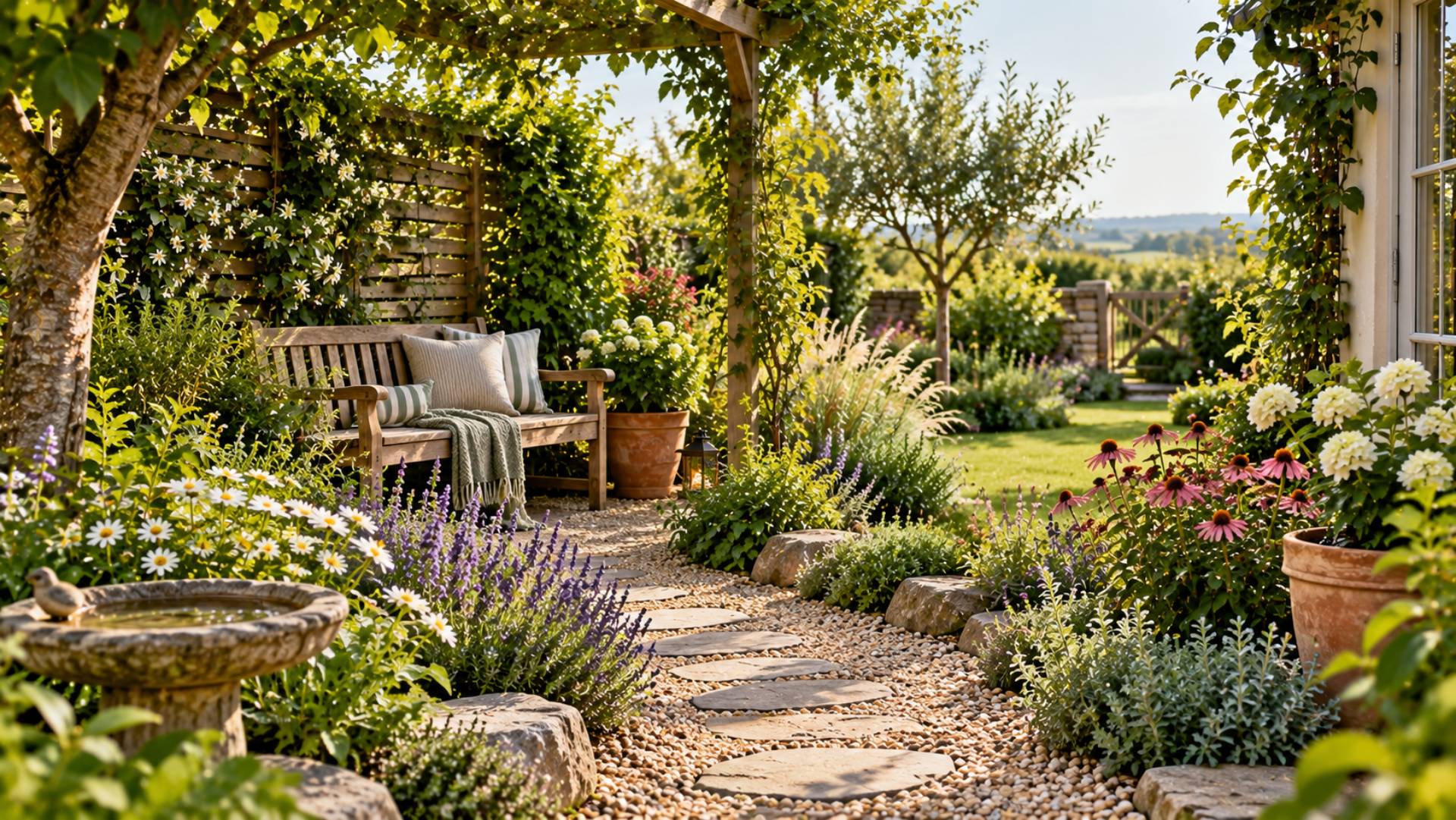
A natural garden should feel relaxed rather than heavily controlled. Instead of perfectly straight borders and identical plants, the aim is to create a space where greenery, texture and simple materials work together naturally.
Planning the garden as part of your wider home project can also help outdoor areas connect more comfortably with the house. Paths, planting and seating should feel like natural extensions of the property rather than separate additions.
Use Layered Planting
A peaceful garden usually contains plants at several different heights. Trees and larger shrubs can form the background, while smaller shrubs, grasses and flowering plants fill the middle and lower levels.
Layering plants creates depth and helps the garden feel established. It can also provide more shelter for birds, insects and other wildlife.
Choose plants with different leaf shapes and textures rather than relying only on bright flowers. Green foliage can provide interest throughout much of the year.
Choose Plants That Suit the Location
Plants are easier to maintain when they naturally suit the garden’s soil, light and local conditions.
Native and climate-appropriate plants often require less attention once established. They can also support local wildlife by providing familiar sources of food and shelter.
Before planting, observe which parts of the garden receive full sun, partial shade or very little direct light.
Keep Paths Soft and Simple
Paths help organise the garden, but they do not need to dominate it.
Gravel, stepping stones, bark and natural stone can create practical routes while maintaining a softer appearance. Curved or gently changing paths often suit informal gardens better than rigid straight lines.
Good landscape design also considers proportion, balance and how different areas connect, helping the garden feel organised without appearing overly formal.
Create a Quiet Seating Area
A peaceful garden needs somewhere to stop and enjoy the surroundings.
Position a bench, small table or comfortable chairs where there is some privacy and a pleasant view. Surrounding the seating area with shrubs, grasses or climbing plants can make it feel more sheltered.
A well-positioned seating area can turn an ordinary corner into a relaxing outdoor retreat.
Add Natural Materials
Wood, stone, gravel and terracotta usually blend comfortably with planting.
Consider timber benches, stone edging, clay pots or gravel pathways instead of filling the garden with highly polished surfaces. Allowing some materials to weather naturally can make the space feel more established over time.
Try to repeat a small selection of materials throughout the garden rather than using a different finish in every area.
Encourage Wildlife
Wildlife can make a garden feel more active and connected to nature.
Dense shrubs provide cover for birds, while flowering plants can attract bees and butterflies. Seed heads, berries and small water sources can provide additional support throughout the seasons.
Leaving a few less-managed areas can also create useful habitats without making the entire garden look untidy.
Keep the Design Uncluttered
A peaceful garden does not need many decorative features.
Choose a few strong elements and give them enough space to stand out. Too many ornaments, colours or competing materials can make a garden feel busy.
Simple planting, clear paths and comfortable seating are often enough to create a calm atmosphere.
FAQs
What makes a garden look natural?
Informal planting, varied heights, natural materials and softer shapes can help a garden feel less structured and more connected to its surroundings.
Are natural gardens difficult to maintain?
Not necessarily. Choosing plants suited to local conditions and reducing overly formal planting can make maintenance easier.
What colours work best in a peaceful garden?
Green foliage combined with softer whites, blues, purples and muted tones can create a calm appearance without overwhelming the space.
Conclusion
Natural garden design is about creating balance rather than perfection. Layered planting, simple pathways, natural materials and comfortable seating can transform an outdoor area without making it feel heavily designed.
By working with the existing character of the garden and choosing plants that suit the conditions, you can create a peaceful outdoor environment that becomes more attractive as it matures.